The Travis Walton Abduction
A logging crew in Arizona's high country watched a glowing disc hurl their coworker Travis Walton backward with a beam of light — then fled, and for five days faced murder suspicion while search teams found nothing. Walton reappeared 130 hours later, dazed and babbling about beings around him. Six witnesses passed polygraphs. It remains the only abduction with a missing-person case attached.
- When
- November 5-10, 1975
- Where
- Turkey Springs, near Snowflake, AZ, USA
- Witnesses
- 7
- Physical evidence
- No
- Military involvement
- No
The Sighting
On November 5, 1975, a seven-man contract crew was thinning brush in the Apache-Sitgreaves National Forest near Turkey Springs, Arizona, under foreman Mike Rogers. Driving out at dusk, the crew saw a luminous golden disc, perhaps 15-20 feet across, hovering silently over a clearing beside the road. Travis Walton, 22, jumped from the truck and walked beneath it. The crew described a sudden beam, a blue-green flash, that lifted Walton off his feet and threw him backward, arms outstretched. Rogers floored the truck in panic. When the crew steeled themselves to return minutes later, there was no disc and no Walton.
They reported it to the sheriff that night, visibly distressed. Searches with men, dogs, and helicopters over freezing high country found no trace, no body, no tracks. Suspicion hardened that the crew had killed Walton and invented a saucer; deputies noted Rogers's logging contract was behind schedule, a possible motive for a vanishing-worker story. To resolve it, the state polygraph examiner tested the six crewmen on whether they had harmed Walton or seen a UFO: five passed, one was inconclusive. The examiner stated the results indicated they had truly seen something they believed was a UFO.
Just after midnight on November 11, five days and six hours after the beam, Walton called his sister's house from a phone booth in Heber, twelve miles away, confused and dehydrated. He remembered perhaps two hours: waking on a table in a humid, hospital-like room under three short, bald, large-eyed beings; fighting them off; wandering a curved corridor; a helmeted human-looking figure leading him to a hangar-like space; and a mask coming down over his face. Then the highway.
The Investigation
The case instantly became a circus. The tabloid National Enquirer sequestered Walton and arranged a first polygraph, administered by examiner Jack McCarthy, under conditions later criticized as unfavorable; McCarthy concluded Walton had engaged in "gross deception," reportedly noting signs Walton was deliberately holding his breath to disrupt the reading. That failed test was suppressed at the time, and the Enquirer instead publicized results from a second, more sympathetic examiner who found the witnesses truthful, a discrepancy skeptics would treat for decades as the case's central wound. Separately, the law-enforcement polygraph of the crew had only ever asked whether they harmed Walton, not whether the UFO story itself was true, a distinction lost in most retellings of "six men passed lie detector tests."
APRO investigated supportively; arch-skeptic Philip Klass built the counter-case, alleging a hoax motivated by Rogers's failing Forest Service contract, which contained a clause about acts of God, and by the family's prior interest in UFOs. Over the following decades Walton, Rogers, and crew members repeated the story under repeated polygraphs, Walton passing tests in 1993 and later, and most of the seven maintained the account for life. The Navajo County Sheriff's Office, having opened the case as a suspected homicide, never filed charges and never reopened it, leaving the file formally closed as an unsolved disappearance rather than a resolved hoax, a distinction proponents consider significant and skeptics consider merely a reflection of insufficient evidence to prosecute.
The Explanations
The skeptical case is the most developed of any abduction: a financially cornered foreman, a crew of young men loyal to him, a tabloid paying for the story, a failed first polygraph suppressed, and an abduction narrative curiously aligned with "The UFO Incident," the Betty and Barney Hill TV movie broadcast nationally just two weeks earlier. On this reading Walton hid for five days, skeptics note the search never covered every cabin and mine, and the polygraphs measured sincerity of collusion rather than truth, or, as Klass argued, were beatable by a practiced subject.
The pro-Walton case rests on the arithmetic of conspiracy: seven men, interrogated separately as murder suspects within hours, the moment of maximum pressure and minimum rehearsal, held a consistent story; five passed polygraphs that week; and the group maintained the account through fifty years of feuds, poverty, fame, and hostile scrutiny, when any single defector could have sold a confession for more than the story ever paid. Walton's post-return medical exam found no drug traces and a puncture mark of ambiguous origin; his psychological profile showed trauma consistent with his claim, and he had lost roughly ten pounds despite showing no sign of five days spent hiding in rough winter terrain without food, shelter, or a change of clothes, an inconvenient physical fact for the hiding-out theory that skeptics have never fully resolved.
Fire in the Sky versus the Real Account
Paramount's 1993 film adaptation is, by the studio's own account, a deliberate departure from Walton's testimony. According to accounts of the production, the studio judged Walton's actual description of the craft's interior, a fairly spare hospital-like room with three small beings, "too fuzzy and too similar to other televised close encounters" to sustain a feature film, and instructed screenwriter Tracy Tormé to invent a "flashier, more provocative" sequence. The result is the film's most famous scene, a nightmarish, body-horror abduction bay with membrane-suited humanoids and Walton strapped to a table screaming, which has no basis in Walton's contemporaneous or later statements and which Walton himself has spent thirty years publicly disowning even while endorsing the film's other elements. The gap between the two versions is now itself a minor case study in how Hollywood reshapes testimony into genre, and skeptics have occasionally, unfairly, used the film's invented horror imagery to caricature what Walton actually claimed.
Witnesses' Fates
Walton and Rogers reconciled and split repeatedly over decades, feuding over money and film rights. Crew member Allen Dalis, the man whose polygraph was inconclusive and whose life was the roughest of the seven, reaffirmed the sighting before his death. Steve Pierce, the youngest, spent years dodging the story before returning to tell it, recounting that Philip Klass had once offered him money to recant, an allegation Klass denied but which Pierce repeated on camera for the rest of his life. The most dramatic late turn came in March 2021, when Mike Rogers, then in his seventies, posted publicly that he no longer considered himself a credible witness and, in a recorded statement, appeared to say the crew had "created a UFO hoax," a declaration that briefly seemed to collapse the case's central pillar of multi-witness corroboration. Rogers subsequently retracted the statement, attributing it to a personal falling-out with Walton over royalties rather than a confession about 1975, and reaffirmed the original account. Researchers on both sides now treat the episode as evidence of how fragile fifty-year-old testimony becomes once money and old grudges reenter the frame, rather than as a clean confession either way.
Documentaries and Popular Culture
"Fire in the Sky," released as a book in 1978 under the title "The Walton Experience" and as a film in 1993, made Travis Walton a household name and remains the only major Hollywood dramatization of an American abduction case. The case has since featured in numerous cable documentaries and, in the 2020s, in podcast-era retrospectives marking the fiftieth anniversary of the sighting, several of which specifically interrogated the Rogers retraction episode.
Recent Developments
Walton, now in his seventies, continues to appear at UFO conventions and hosts his own annual "Skyfire Summit" conference in Arizona, positioning himself as an elder statesman of the abduction community rather than retreating from public life. A 2025 fiftieth-anniversary retrospective found him weary of renewed debunking attempts but unmoved on the core facts, telling one interviewer that the story had cost him more than it ever gave him and that he stood by it regardless.
Why It Endures
The case's real power is structural: it is the only abduction that began as a police matter with the abductee genuinely, verifiably missing. There is no missing-time ambiguity here; there are five days, a manhunt, and seven witnesses whose lives were upended. It is also ufology's fiercest battlefield of polygraph evidence, showcasing both the technique's persuasive force and its unreliability, and, after 2021, a case study in how even a fifty-year united front can crack under money and age without the crack necessarily meaning what headline writers wanted it to mean. Believer or skeptic, everyone concedes one thing: something happened at Turkey Springs that six men were willing to be murder suspects rather than deny, and one of them was willing, decades later, to nearly unsay it before taking it back.
Official investigation
Navajo County Sheriff investigation (initially as suspected homicide); state police polygraphs
Evidence & media
3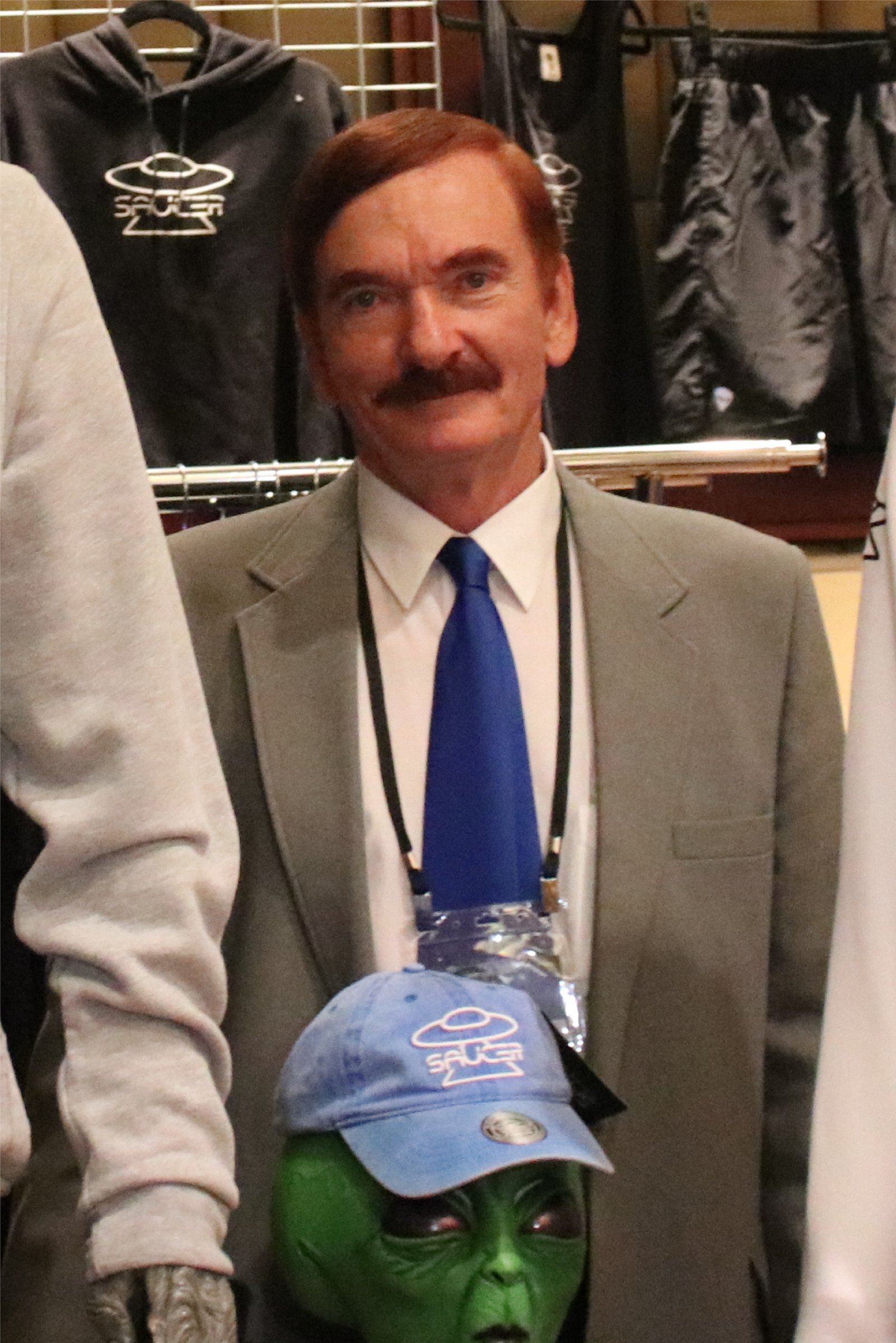
Travis Walton photographed in 2019, decades after his November 1975 disappearance near Turkey Springs, Arizona.Source ↗ 
Artist's illustration (2013) of Walton's account of being led into the craft's interior by a humanoid being — an interpretation of his testimony, not documentary evidence.Source ↗ 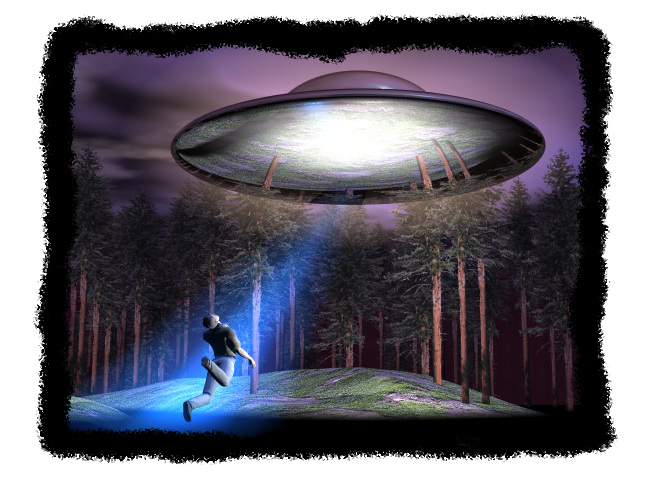
Diagram reconstructing the object and setting described in Walton's initial 1975 sighting report.Source ↗